
Long before there was a nation called Israel, before there was a temple in Jerusalem, and centuries before Jesus was born in Bethlehem, God made a promise to one man. That man was Abraham, and the promise God made to him is one of the most important threads in the whole Bible. It is called the blessing of Abraham, and it still matters for anyone who believes today.
In simple terms, the blessings of Abraham are the promises God made to Abraham in the book of Genesis: that He would make him into a great nation, bless him, make his name great, protect him, and bless every family on earth through him. These were not empty words. They shaped the story of Israel, they pointed forward to Jesus Christ, and, as the apostle Paul explains, they reach everyone who trusts God by faith.
This guide walks through what the blessings of Abraham are, the four moments in Genesis when God spoke them, and what they mean for your life today.
What Are the Blessings of Abraham?
The blessing of Abraham is God’s promised favor to Abraham, and the good God intended to bring to the nations through him. It includes descendants, land, and a lasting covenant relationship with God. Through Jesus Christ, people of every nation share in this blessing by faith: they are counted righteous, they receive the promised Holy Spirit, and they become heirs of God’s promise.
When the Bible speaks of blessing, it means far more than a kind wish or a lucky break. A blessing from God is His favor resting on a person’s life, His presence going with them, and His purposes working through them. If you want a fuller picture of the word itself, this guide to what a blessing means in Scripture and everyday life is a helpful place to start.
The blessing of Abraham is not one single promise. It is a bundle of promises God gave over many years, each one building on the last. To understand it, we need to go back to where the story begins.
The Story Behind the Promise
Abraham’s story begins when his name is still Abram. He is living in Haran with his wife Sarai, seventy-five years old and childless, in a world that measured a man’s worth by his sons and his land. He has neither an heir nor a home of his own. Then God speaks.
“And I will make of thee a great nation, and I will bless thee, and make thy name great; and thou shalt be a blessing: And I will bless them that bless thee, and curse him that curseth thee: and in thee shall all families of the earth be blessed.” (Genesis 12:2-3, KJV)
Look closely at what God is doing here. He asks Abram to leave everything familiar — his country, his relatives, his father’s house — and walk toward a land God will show him. In exchange, God promises what Abram cannot give himself: a family, a future, a name, and a part in God’s plan for the whole world. Abram believes, packs up his household, and goes. The book of Hebrews remembers it this way: “By faith Abraham, when he was called to go out into a place which he should after receive for an inheritance, obeyed; and he went out, not knowing whither he went.” (Hebrews 11:8, KJV)
The Four Moments God Spoke the Promise
God did not speak His promise to Abraham once and leave it there. He returned to it four times across Abraham’s life, and each time He added depth and certainty. Following these four moments shows how the blessing grew from a first word into a confirmed covenant.
1. Genesis 12: The Call and the First Promise
This is where it all starts. God calls Abram out of Haran and gives him the promises of Genesis 12:1-3: a great nation, personal blessing, a great name, and blessing for all the families of the earth. When Abram arrives in Canaan, God adds the promise of the land itself: “Unto thy seed will I give this land.” (Genesis 12:7, KJV)
2. Genesis 15: The Covenant Sealed Under the Stars
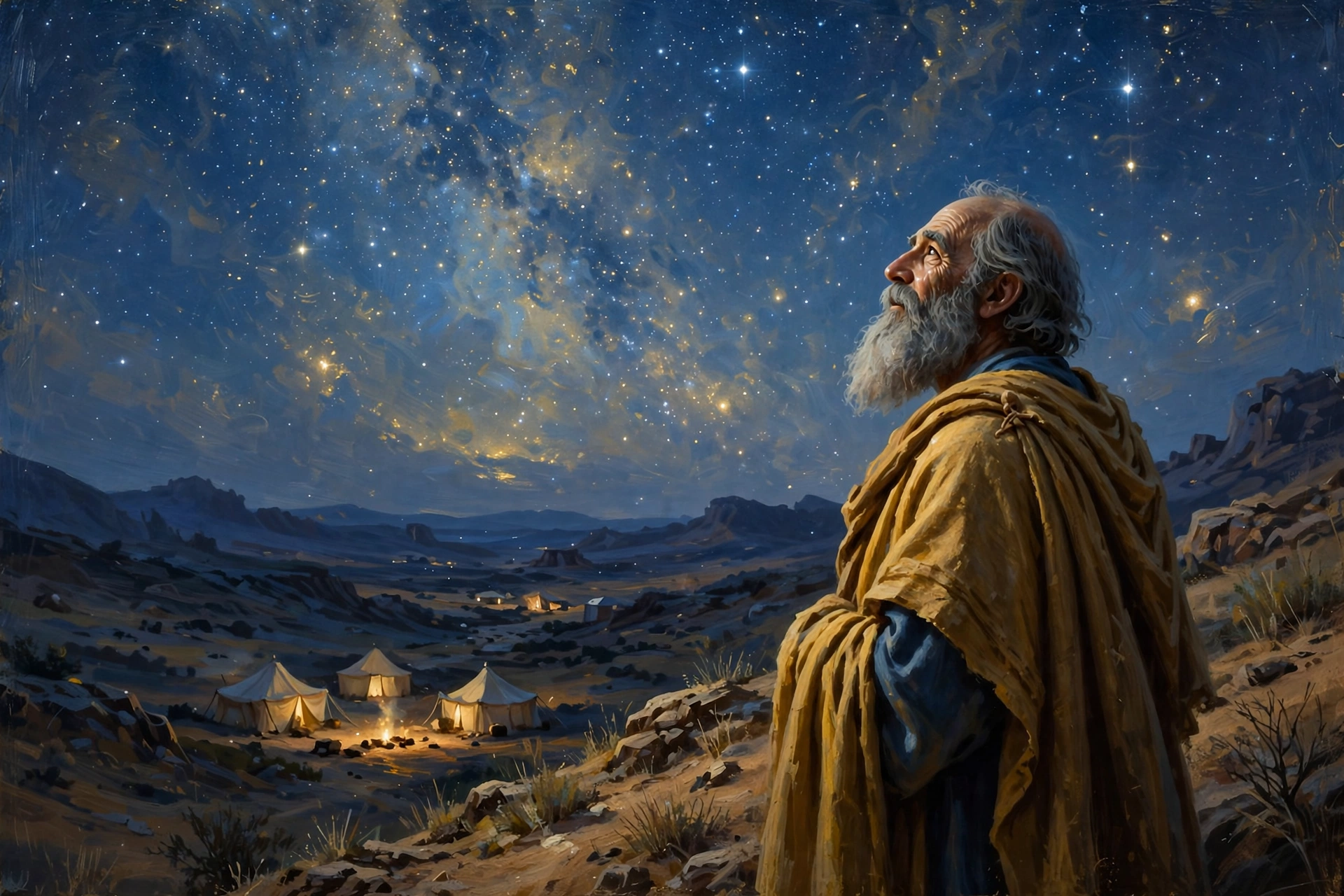
Years pass, and Abram is still childless. In Genesis 15, God takes him outside at night and tells him to count the stars. “Look now toward heaven, and tell the stars, if thou be able to number them,” God says, “and he said unto him, So shall thy seed be.” (Genesis 15:5, KJV) Then comes one of the most important verses in the Bible: “And he believed in the LORD; and he counted it to him for righteousness.” (Genesis 15:6, KJV)
Abram is counted righteous not because of anything he has done, but because he trusts God’s word. That same evening, God formalizes the covenant, promising the land from the river of Egypt to the river Euphrates (Genesis 15:18). God also tells Abram honestly that his descendants will face hardship and oppression before deliverance comes (Genesis 15:13-14). The promise is real, and so is the road it travels.
3. Genesis 17: A New Name and an Everlasting Covenant
Thirteen years later, God appears again and changes Abram’s name to Abraham, which means “father of many nations.” “Neither shall thy name any more be called Abram, but thy name shall be Abraham; for a father of many nations have I made thee.” (Genesis 17:5, KJV) God also gives the covenant a sign, circumcision, and declares it everlasting: “And I will establish my covenant between me and thee and thy seed after thee in their generations for an everlasting covenant, to be a God unto thee, and to thy seed after thee.” (Genesis 17:7, KJV)
The new name matters. Every time someone speaks Abraham’s name, they are speaking the promise itself. God is not only going to give Abraham a son. He is going to make him the father of nations and kings.
4. Genesis 22: The Promise Confirmed After the Test
The final moment comes after the hardest test of Abraham’s life. God asks him to offer Isaac, the long-promised son, and Abraham obeys, trusting that God can provide. At the last moment, God stops him and provides a ram instead. Then God speaks the promise once more, this time with an oath, because Abraham has shown that his trust is real.
“That in blessing I will bless thee, and in multiplying I will multiply thy seed as the stars of the heaven, and as the sand which is upon the sea shore… And in thy seed shall all the nations of the earth be blessed; because thou hast obeyed my voice.” (Genesis 22:17-18, KJV)
Notice the connection. The blessing of the nations is tied to Abraham’s obedience. His faith worked through his actions, and God honored it. Years later, when Isaac blesses Jacob, he passes on this same blessing by name: “And give thee the blessing of Abraham, to thee, and to thy seed with thee.” (Genesis 28:4, KJV)
The Seven Promises in Genesis 12:2-3
Read slowly, those three verses hold seven distinct promises. Counting them this way is a helpful way to see everything God packed into His first word to Abraham. It is not a separate doctrine, just a clear look at the text itself.
- “I will make you into a great nation.” God promises descendants, a people, a future family.
- “I will bless you.” God’s personal favor rests on Abraham’s life.
- “I will make your name great.” Abraham will be honored and remembered, not forgotten.
- “You will be a blessing.” Abraham is not only blessed, he becomes a channel of blessing to others.
- “I will bless those who bless you.” God promises favor to those who treat Abraham well.
- “Whoever curses you I will curse.” God promises to defend Abraham against those who oppose him.
- “All peoples on earth will be blessed through you.” The promise reaches beyond one family to the whole world.
That last promise is the widest of all, and it is the key to the whole blessing. God chose one man so that, through him, blessing could reach everyone.
What the Blessings of Abraham Mean for Believers Today
So what does a promise made to a man four thousand years ago have to do with you? The New Testament answers that question directly, and its answer is the heart of the Christian faith. Paul explains in Galatians 3 that the blessing of Abraham reaches the nations through Jesus Christ, and that anyone who trusts God by faith shares in it.
Counted Righteous by Faith
Abraham was counted righteous because he believed God, and the same is true for us. “For what saith the scripture? Abraham believed God, and it was counted unto him for righteousness.” (Romans 4:3, KJV) Paul writes that those who rely on faith are blessed along with Abraham, the man of faith (Galatians 3:6-9). You do not earn God’s acceptance by keeping a set of rules. Like Abraham, you receive it by trusting God’s word.
Heirs of the Promise
Paul goes further. The promise was made to Abraham and to his offspring, and that offspring is Christ (Galatians 3:16). So the promise finds its fulfillment in Jesus, and everyone who belongs to Christ shares in it: “And if ye be Christ’s, then are ye Abraham’s seed, and heirs according to the promise.” (Galatians 3:29, KJV) That is why the blessing is not limited to one nation or one family line. In Christ, it belongs to anyone who believes, from any nation on earth.
The Gift of the Holy Spirit
The blessing also comes with a gift. “That the blessing of Abraham might come on the Gentiles through Jesus Christ; that we might receive the promise of the Spirit through faith.” (Galatians 3:14, KJV) God does not only forgive believers and count them righteous. He gives them His Spirit to live within them, to guide them, comfort them, and change them from the inside out. This is the most personal part of the blessing: God Himself comes to dwell with His people.
Made to Be a Blessing
Finally, the blessing of Abraham turns outward. God told Abraham, “You will be a blessing,” and that calling passes to everyone who shares in the promise. A blessed life is not meant to stop with you. It flows through you — in generous giving, in kind words, in prayers for others, in the way you treat the people around you. Scripture puts it beautifully: God, even our own God, shall bless us, and His blessing is meant to be shared. When you bless others, you are living the very pattern God set with Abraham.

What the Blessing of Abraham Does Not Promise
It is important to be honest here, because this blessing is sometimes taught in ways the Bible does not support. Some teachers claim that, since believers are Abraham’s heirs, every Christian can expect Abraham’s wealth, perfect health, and constant success. The Bible does not promise that.
It is true that God blessed Abraham materially. By the end of his life, Scripture says plainly, “the LORD had blessed Abraham in all things.” (Genesis 24:1, KJV) God also blessed Isaac’s work so that he reaped a hundredfold in a hard year (Genesis 26:12-14). God can and does provide for His people, sometimes generously.
But the New Testament never turns that into a guarantee for every believer. Paul knew both plenty and hunger, and he learned contentment in either (Philippians 4:12). Timothy, Paul’s close companion, suffered frequent illnesses (1 Timothy 5:23). The Christians in Macedonia were deeply poor, yet Paul says they were rich in grace and overflowing in generosity (2 Corinthians 8:1-2). Poverty or sickness does not mean someone lacks faith or stands outside Abraham’s blessing.
The blessing of Abraham is certain in Christ: forgiveness, righteousness, the Holy Spirit, and an eternal inheritance. The circumstances of our lives — wealth, health, comfort — are not all identical, and God never promised they would be. Anyone who tells you otherwise is selling something the Bible does not offer. What God does promise is His presence with you in every circumstance, and that is worth more than any of the rest.
How to Live in the Blessing of Abraham Today
Knowing about the blessing is one thing. Living in it is another. Abraham’s own life shows us how.
Trust God Before You See the Outcome
Abraham believed God’s promise for years before he saw a single part of it fulfilled. He was seventy-five when God called him and one hundred when Isaac was born. Trust does not wait for proof. It takes God at His word and walks forward, even when the road is unclear. When you are waiting on a promise of your own, remember that waiting is part of the story, not the end of it.
Obey, Even When the Path Is Unclear
Abraham left Haran not knowing where he was going. He obeyed at each step, and the next step became clear only after he took the first one. Obedience rarely comes with a full map. It comes with a next step, and faith takes it.
Thank God and Be Generous
Abraham built altars wherever God met him, and he gave generously, including a tenth of all he had to Melchizedek (Genesis 14:20). Gratitude and generosity are the natural responses to blessing. When you thank God for what He has given you and share it freely with others, you are walking in Abraham’s footsteps. And when God shows you favor, remember the promise of Genesis 12:3 — the favor of God can even turn opposition around, as this look at what it means when God favors you explains.
Bless Others With Your Words
Abraham’s blessing was never meant to end with Abraham. Speak blessing over your family, your friends, and the people you meet. A sincere word of encouragement, a prayer spoken aloud, a kind message sent at the right moment — these are small things, but they carry the same pattern God set in motion long ago. Blessed people bless people.
Key Bible Verses About the Blessings of Abraham
- Genesis 12:2-3 — The original promise: a great nation, personal blessing, a great name, and blessing for all the families of the earth.
- Genesis 12:7 — “Unto thy seed will I give this land.” The promise of the land of Canaan.
- Genesis 15:5-6 — Descendants as numerous as the stars, and Abraham counted righteous because he believed.
- Genesis 17:5-7 — A new name, father of many nations, and an everlasting covenant.
- Genesis 22:17-18 — The promise confirmed with an oath after Abraham’s obedience.
- Genesis 28:4 — Isaac passes “the blessing of Abraham” to Jacob.
- Galatians 3:8 — Scripture foresaw that God would justify the Gentiles by faith and announced the gospel to Abraham in advance.
- Galatians 3:14 — The blessing of Abraham comes to the Gentiles through Christ, so that we might receive the promise of the Spirit by faith.
- Galatians 3:29 — “If ye be Christ’s, then are ye Abraham’s seed, and heirs according to the promise.”
- Romans 4:3 — “Abraham believed God, and it was counted unto him for righteousness.”
- Hebrews 11:8 — By faith Abraham obeyed and went out, not knowing where he was going.
Frequently Asked Questions
Does the blessing of Abraham apply to Christians today?
Yes, according to the New Testament. Paul teaches in Galatians 3 that the blessing of Abraham comes to the Gentiles through Jesus Christ, and that everyone who belongs to Christ is Abraham’s seed and an heir of the promise (Galatians 3:14, 3:29). The national and land promises were given to Abraham’s physical descendants, but the spiritual blessing — being counted righteous by faith, receiving the Holy Spirit, and sharing in God’s promise — belongs to all who believe.
Does the blessing of Abraham promise wealth and health?
No. God did bless Abraham with wealth, and He can provide generously for His people today. But the Bible never promises every believer Abraham’s wealth or uninterrupted health. Paul experienced hunger and need, Timothy had frequent illnesses, and the Macedonian Christians were deeply poor while being rich in grace. The blessing of Abraham guarantees forgiveness, righteousness, the Spirit, and an eternal inheritance — not identical circumstances for every believer.
Are the blessings of Abraham the same as the seven spiritual blessings?
No, they are different subjects. The phrase “spiritual blessings” comes from Ephesians 1:3, where Paul says God has blessed believers “with all spiritual blessings in heavenly places in Christ.” That passage describes what believers already have in Christ. The blessings of Abraham are the specific covenant promises God made to Abraham in Genesis, which find their fulfillment in Christ. Both come through Jesus, but they are not the same list.
What is the difference between the blessing of Abraham and the blessings in Deuteronomy 28?
The blessings in Deuteronomy 28 belong to the covenant God made with Israel through Moses at Mount Sinai. They were tied to Israel keeping the law, with blessings for obedience and curses for disobedience. The blessing of Abraham came earlier, and it rests on God’s promise and on faith, not on keeping the law. Paul makes this exact point in Galatians 3: the law came 430 years after the promise, and it cannot cancel a promise God already made (Galatians 3:17).
Abraham died without seeing the full promise. Hebrews says he and the other patriarchs “died in faith, not having received the promises, but having seen them afar off.” (Hebrews 11:13, KJV) Yet the promise did not fail. It grew into a nation, it produced the Messiah, and it now reaches every person who trusts God the way Abraham did. The blessing that began with one man’s obedience now belongs to anyone who believes — and that includes you.

1 thought on “The Blessings of Abraham: What God Promised and What They Mean for You Today”