
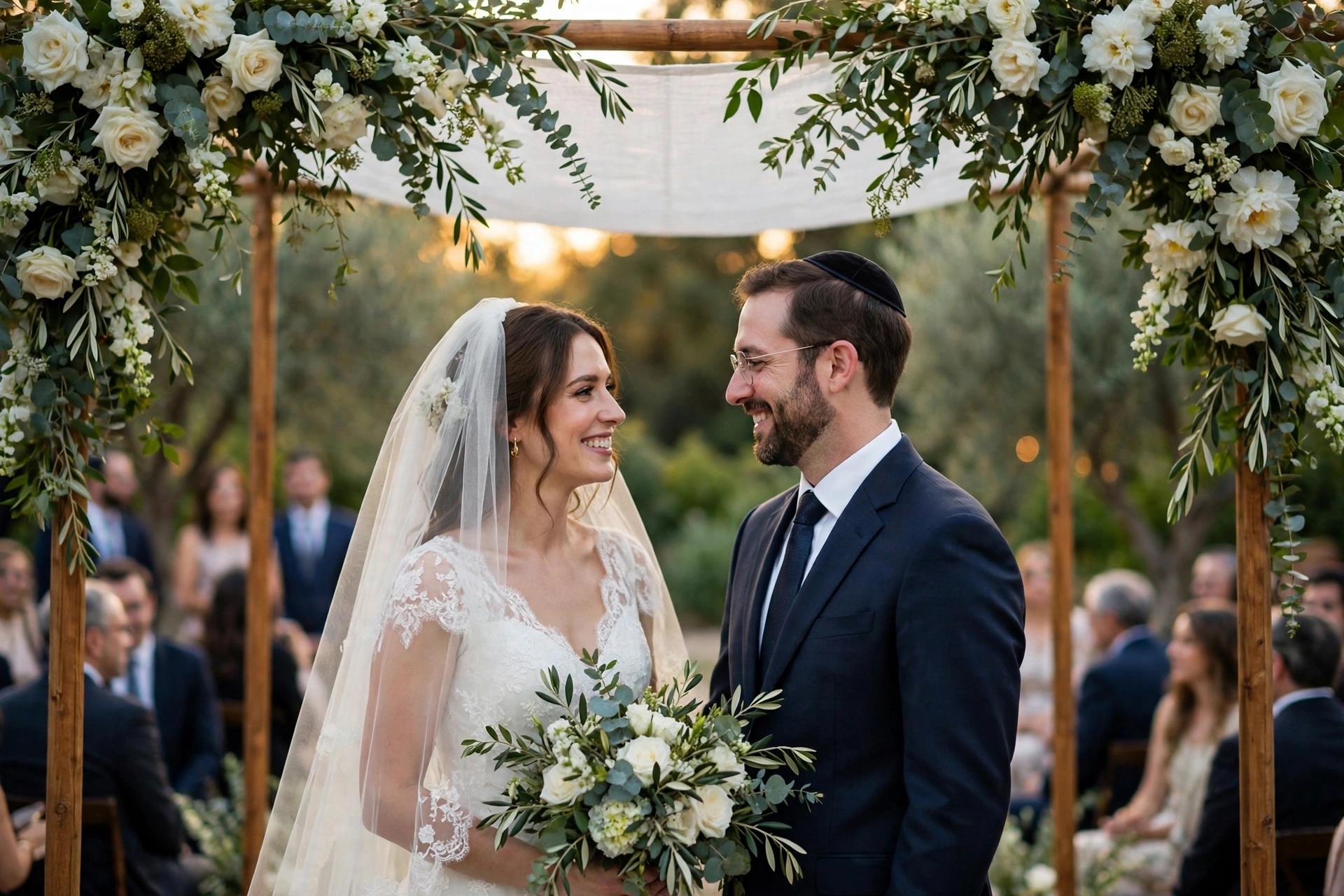
Near the end of a Jewish wedding ceremony, under the chuppah, seven blessings are sung over a cup of wine. They are among the oldest wedding words still spoken anywhere — recorded in the Talmud some fifteen hundred years ago, and already traditional when they were written down. Together they are called the Sheva Brachot, the Seven Blessings, and they are the heart of the Jewish wedding.
What makes them remarkable is their shape. They begin as widely as possible — with wine, and with the whole of creation — and narrow, one blessing at a time, until they arrive at the two people standing beneath the canopy. By the final blessing, the whole room has traveled from the beginning of the world to this one wedding, on this one day.
This guide gives you the full text of the Seven Blessings in Hebrew, with transliteration and English translation, explains what each blessing means, and covers when they are recited, who recites them, and how couples today make them their own — whether the wedding is traditional, interfaith, or something in between.
What Are the Seven Blessings?
Sheva Brachot is Hebrew for “seven blessings.” In Jewish law they are also called birkot nissuin, the wedding blessings. They are recited near the end of the nissuin, the second half of the Jewish wedding ceremony, when the couple are fully married — after the ketubah, the marriage contract, has been read.
A Jewish wedding has two stages: erusin, the betrothal, and nissuin, the marriage itself. Long ago, a year could pass between the two. Today the two stages are combined into a single ceremony, and the Sheva Brachot close the nissuin — which is why they feel like the climax of the whole ceremony. The blessings are then repeated at the wedding meal, and again at festive meals during the seven days that follow.
At their core, the blessings say that a marriage is not a private event. Each blessing widens the circle: from the wine in the cup, to the world, to humanity, to the people of Israel, and finally to this couple. If you have ever wondered what a blessing really is and how a few spoken words can carry so much weight, the Sheva Brachot are a good place to start. The way blessing is understood in scripture and everyday life helps explain why these seven blessings matter so much — they are not wishes for good luck, but a deliberate act of gratitude, spoken aloud, in front of the whole community.
The Seven Blessings: Hebrew, Transliteration, and English Translation
Below is the traditional text of each blessing, in Hebrew, with a transliteration so you can read it aloud, and an English translation. The wording varies slightly between Ashkenazi and Sephardic communities, and from one community to another; the version here is the widely used Ashkenazi text.
1. The Blessing Over Wine
Hebrew: בָּרוּךְ אַתָּה יְיָ אֱלֹהֵינוּ מֶלֶךְ הָעוֹלָם, בּוֹרֵא פְּרִי הַגָּפֶן.
Baruch ata Adonai, Eloheinu melech ha’olam, borei p’ri hagafen.
Blessed are You, Lord our God, Ruler of the Universe, who creates the fruit of the vine.
What it means: Wine is the sign of joy and celebration throughout Jewish ritual, so the blessings begin with it. Under the chuppah this blessing comes first; at the wedding meal it comes last, after the Grace After Meals. That small change tells you something important: the seven blessings are a single unit, rearranged to fit the moment.
2. The Blessing Over Creation
Hebrew: בָּרוּךְ אַתָּה יְיָ אֱלֹהֵינוּ מֶלֶךְ הָעוֹלָם, שֶׁהַכֹּל בָּרָא לִכְבוֹדוֹ.
Baruch ata Adonai, Eloheinu melech ha’olam, she’hakol bara likhvodo.
Blessed are You, Lord our God, Ruler of the Universe, who created everything for Your glory.
What it means: The wedding is placed inside the whole created world from the very start. Nothing about the day is small or separate, and the guests gathered to witness it are part of it.
3. The Blessing Over Humanity
Hebrew: בָּרוּךְ אַתָּה יְיָ אֱלֹהֵינוּ מֶלֶךְ הָעוֹלָם, יוֹצֵר הָאָדָם.
Baruch ata Adonai, Eloheinu melech ha’olam, yotzer ha’adam.
Blessed are You, Lord our God, Ruler of the Universe, who created humanity.
What it means: Short and direct: gratitude for the creation of the human being. The blessings are narrowing now — from the world to the people in it.
4. The Blessing Over Humanity in God’s Image
Hebrew: בָּרוּךְ אַתָּה יְיָ אֱלֹהֵינוּ מֶלֶךְ הָעוֹלָם, אֲשֶׁר יָצַר אֶת הָאָדָם בְּצַלְמוֹ, בְּצֶלֶם דְּמוּת תַּבְנִיתוֹ, וְהִתְקִין לוֹ מִמֶּנּוּ בִּנְיַן עֲדֵי עַד. בָּרוּךְ אַתָּה יְיָ, יוֹצֵר הָאָדָם.
Baruch ata Adonai, Eloheinu melech ha’olam, asher yatzar et ha’adam b’tzalmo, b’tzelem d’mut tavnito, v’hitkin lo mimenu binyan adei ad. Baruch ata Adonai, yotzer ha’adam.
Blessed are You, Lord our God, Ruler of the Universe, who created humanity in Your image, in the image of the likeness of Your form, and made for them an everlasting establishment. Blessed are You, Lord, who created humanity.
What it means: The longest of the middle blessings, and the most intimate. It gives thanks that people were made in the divine image, and that from the first person came a partner, so that two people could build a shared life. The phrase “an everlasting establishment” is the rabbis’ way of saying that marriage is meant to last — a home built to endure.
5. The Blessing for Zion
Hebrew: שׂוֹשׂ תָּשִׂישׂ וְתָגֵל הָעֲקָרָה, בְּקִבּוּץ בָּנֶיהָ לְתוֹכָהּ בְּשִׂמְחָה. בָּרוּךְ אַתָּה יְיָ, מְשַׂמֵּחַ צִיּוֹן בְּבָנֶיהָ.
Sos tasis v’tagel ha’akara, b’kibbutz baneha l’tochah b’simcha. Baruch ata Adonai, m’sameiach Tzion b’vaneha.
May the barren one rejoice greatly and delight in the ingathering of her children within her in joy. Blessed are You, Lord, who causes Zion to rejoice with her children.
What it means: This is the blessing that surprises most guests. At the height of personal joy, the blessings pause to remember Jerusalem — pictured here as a mother separated from her children — and pray that she will rejoice when her children come home. It is the same instinct behind the breaking of the glass that follows the ceremony: even in joy, the community remembers what is broken and hopes for repair.
6. The Blessing for the Couple, as in Eden
Hebrew: שַׂמֵּחַ תְּשַׂמַּח רֵעִים הָאֲהוּבִים, כְּשַׂמֵּחֲךָ יְצִירְךָ בְּגַן עֵדֶן מִקֶּדֶם. בָּרוּךְ אַתָּה יְיָ, מְשַׂמֵּחַ חָתָן וְכַלָּה.
Sameach t’samach rei’im ha’ahuvim, k’simchacha y’tzircha b’gan Eden mikedem. Baruch ata Adonai, m’sameiach chatan v’kala.
May the loving companions rejoice as You caused Your creatures to delight in the Garden of Eden of old. Blessed are You, Lord, who causes the groom and bride to rejoice.
What it means: The blessings turn to the couple at last, and reach back to the Garden of Eden — the first companionship. The prayer is simple: may these two know the same joy the first couple knew.
7. The Blessing of Joy
Hebrew: בָּרוּךְ אַתָּה יְיָ אֱלֹהֵינוּ מֶלֶךְ הָעוֹלָם, אֲשֶׁר בָּרָא שָׂשׂוֹן וְשִׂמְחָה, חָתָן וְכַלָּה, גִּילָה, רִנָּה, דִּיצָה, וְחֶדְוָה, אַהֲבָה וְאַחֲוָה, וְשָׁלוֹם וְרֵעוּת. מְהֵרָה יְיָ אֱלֹהֵינוּ, יִשָּׁמַע בְּעָרֵי יְהוּדָה וּבְחֻצוֹת יְרוּשָׁלָיִם, קוֹל שָׂשׂוֹן וְקוֹל שִׂמְחָה, קוֹל חָתָן וְקוֹל כַּלָּה, קוֹל מִצְהֲלוֹת חֲתָנִים מֵחֻפָּתָם, וּנְעָרִים מִמִּשְׁתֵּה נְגִינָתָם. בָּרוּךְ אַתָּה יְיָ, מְשַׂמֵּחַ חָתָן עִם הַכַּלָּה.
Baruch ata Adonai, Eloheinu melech ha’olam, asher bara sason v’simcha, chatan v’kala, gila, rina, ditzah v’chedva, ahava v’achava, v’shalom v’rei’ut. M’heira Adonai Eloheinu, yishama b’arei Yehuda u’vchutzot Yerushalayim, kol sason v’kol simcha, kol chatan v’kol kala, kol mitzhalot chatanim meichupatam, u’n’arim mimishtei n’ginatam. Baruch ata Adonai, m’sameiach chatan im ha’kala.
Blessed are You, Lord our God, Ruler of the Universe, who creates happiness and joy, groom and bride, exultation, delight, amusement, and pleasure, love and brotherhood, peace and friendship. Soon, Lord our God, may the sound of happiness and the sound of joy, the voice of the groom and the voice of the bride, be heard in the cities of Judah and the streets of Jerusalem — the rejoicing of grooms from their canopies and youths from their singing banquets. Blessed are You, Lord, who makes the groom rejoice with the bride.
What it means: The longest and most exuberant of the seven, and the one most guests recognize. It names ten kinds of happiness — joy and gladness, mirth and song, delight and rejoicing, love and harmony, peace and companionship — and prays that the voices of bride and groom, of feasting and celebration, will soon be heard in the cities of Judah and the streets of Jerusalem. Traditionally, everyone present joins in singing parts of this final blessing.
When Are the Seven Blessings Recited?
Under the Chuppah
The blessings are chanted in Hebrew near the end of the ceremony, over a cup of wine, usually by the rabbi or cantor. In the Sephardic tradition, a parent often wraps the couple in a tallit, a prayer shawl, before the blessings are recited, to mark the intimacy of the moment. Many couples print the blessings — in Hebrew, in English, or both — in their wedding programs so that guests can follow along and join in the final blessing.
At the Wedding Meal
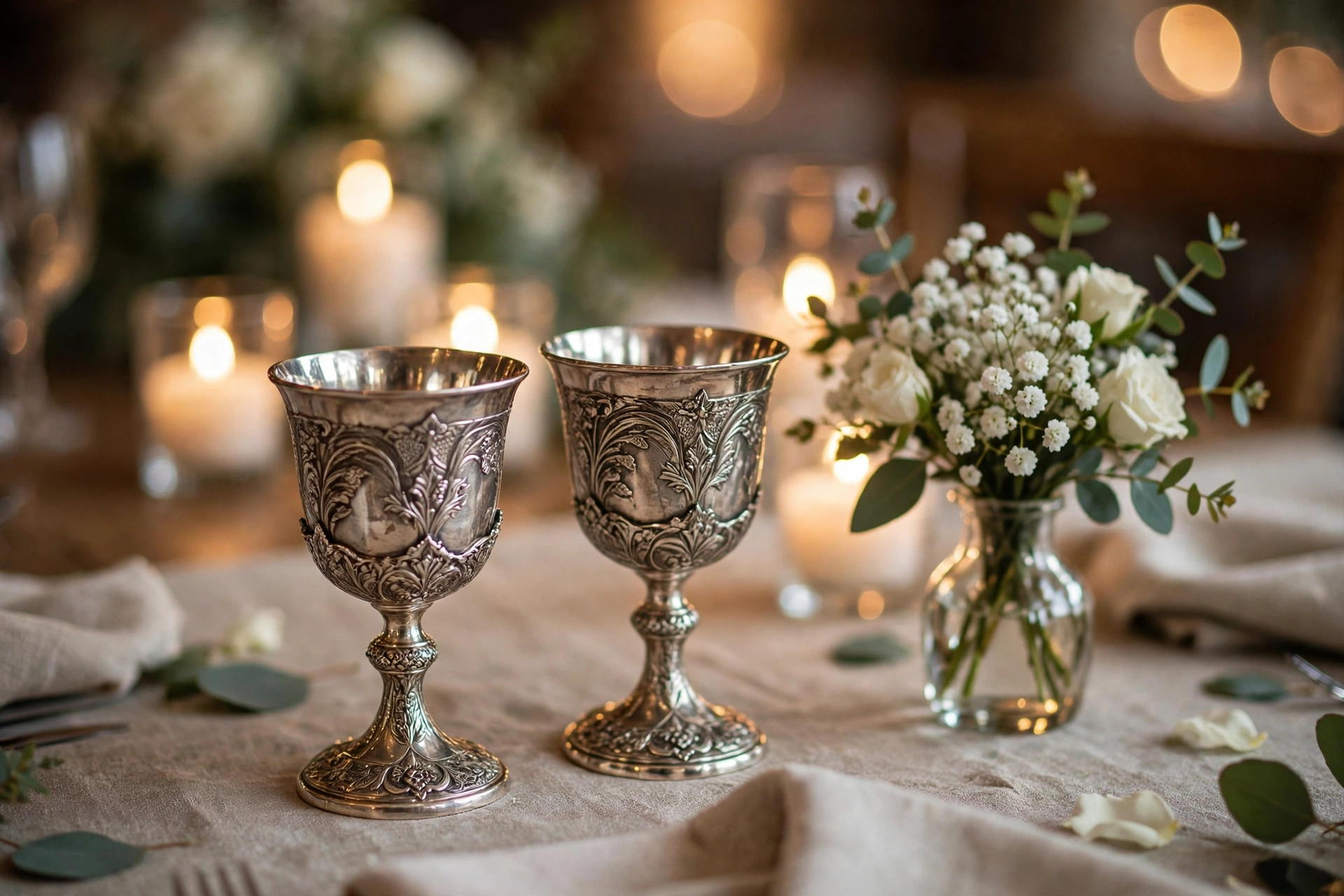
The blessings are recited a second time at the festive meal, after the Birkat Hamazon, the Grace After Meals. This time the blessing over wine moves to the final position. The couple often drink from the cup, and in a much-loved custom the wine is divided into two cups — one for the bride, one for the groom — then poured together into a third cup and shared with the community, a picture of two lives becoming one.
The Seven Days After the Wedding
Jewish tradition holds that the week after the wedding belongs to the community as much as to the couple. For seven days, the bride and groom are treated like a king and queen, and each evening they dine at the home of a different friend or relative. These festive meals are themselves called Sheva Brachot, and after dinner the seven blessings are recited again — provided a minyan of ten is present and at least one guest is someone new, a “new face” who was not at the wedding.
In generations when marriages were arranged and a couple might barely have known each other, these dinners gave them a week of company and support as their marriage began. Today the custom is kept most regularly in traditional circles, but plenty of other couples keep some version of it — a few dinners in the first week, or a week of Sheva Brachot meals when they return from their honeymoon. Some couples even postpone the honeymoon so they can celebrate with their community first.
Who Recites the Seven Blessings?
Traditionally the rabbi or cantor chants the blessings, but it is very common to divide them among seven honored guests — grandparents, siblings, close friends, a teacher. Asking seven different people to take one blessing each is a thoughtful way to include people who are not in the wedding party, and it gives the moment a warmth that a single voice cannot.
Readers may recite in Hebrew, in English, or in Hebrew followed by an English reading. Many cantors sing the Hebrew while a guest reads the translation. If you are choosing readers, pick people who are comfortable speaking in front of a crowd, give them the text well ahead of time, and let them know whether you would like Hebrew, English, or both.
In Orthodox settings, tradition holds that only Jewish men are counted in the minyan and recite the blessings. In liberal communities, men and women are equally welcomed to recite them. Talk with your officiant early about what your community’s practice is, so there are no surprises on the day.
Modern Variations and How Couples Make Them Their Own
Many couples keep the Hebrew exactly as it is and choose an English rendering that speaks to them. Others use an interpretive version that keeps the shape of the blessings — from creation to the couple — in modern language. The best-known interpretive version is Anita Diamant’s, published in The New Jewish Wedding (1985, revised 2001), a book many couples planning a Jewish or interfaith ceremony keep on hand. Ask your rabbi or cantor, too; most have several versions they have used and can help you choose.
Rabbis in the Reform, Reconstructionist, and Conservative movements routinely adapt the wording of the sixth and seventh blessings for two brides or two grooms, and for couples who prefer words like “partners” or “loved ones.” In Orthodox communities, some women have created a companion tradition called the Sheva Shevahot, the seven praises, recited before the wedding meal and celebrating the accomplishments of biblical women. A widely used compromise, described by Rabbi Dov Linzer, calls both a man and a woman to the chuppah in pairs for each blessing: the man recites in Hebrew and the woman reads the English translation.
For interfaith weddings, the Seven Blessings translate unusually well, because their movement — gratitude for the world, for being human, for companionship, and for joy — is shared across traditions. Some couples ask seven guests from both families to read one blessing each, alternating between the two sides. If you are planning an interfaith ceremony, talk it over with your officiant first; some rabbis prefer the Hebrew to be recited by a Jewish guest, with the English read by anyone.
How to Include the Seven Blessings in Your Wedding
A little planning goes a long way. Choose your seven readers early, and send each of them the text of their blessing — in Hebrew, in English, or both — at least a few weeks before the wedding, so nobody is reading cold. Decide with your officiant whether the blessings will be sung, spoken, or a mix of the two, and whether the wine cup will be shared by the couple alone or passed among the readers.
If you are printing a wedding program, include the blessings in full. Guests who can follow the words, in whatever language they understand, become part of the moment instead of watching it from the outside. That is the point of the Sheva Brachot: the blessings are spoken on behalf of the couple, but they belong to everyone in the room.
Frequently Asked Questions
What are the Seven Blessings in a Jewish wedding?
The Seven Blessings, or Sheva Brachot, are seven blessings recited near the end of the Jewish wedding ceremony, under the chuppah, over a cup of wine. They move from gratitude for creation itself to joy for the couple, and they are repeated at the wedding meal and at festive meals during the seven days after the wedding.
When are the Sheva Brachot recited?
Three times, in three settings: under the chuppah during the ceremony, at the wedding meal after the Grace After Meals, and at a festive dinner each evening for the seven days following the wedding — as long as a minyan of ten is present and at least one guest is new.
Who can recite the Seven Blessings?
Traditionally the rabbi or cantor chants them, but they are often divided among seven honored guests. In Orthodox practice, only Jewish men recite them; in liberal communities, men and women are equally welcome. Your officiant can confirm what applies to your ceremony.
Do the Seven Blessings have to be in Hebrew?
No. The Hebrew is traditional and most couples keep it, but the blessings are often read in English as well — either instead of the Hebrew, or after it. Many couples have the cantor sing the Hebrew while a guest reads the English translation.
What is the difference between the Sheva Brachot and the week of Sheva Brachot?
The Sheva Brachot are the seven blessings themselves. The “week of Sheva Brachot” is the custom of celebrating with festive meals on each of the seven evenings after the wedding, at which the blessings are recited again. The meals take their name from the blessings.
Can the Seven Blessings be used at an interfaith wedding?
Yes, and they often are. Their themes — gratitude for the world, for being human, for companionship, and for joy — are shared across traditions. Couples commonly ask guests from both families to read them, and rabbis can adapt the wording. Discuss the details with your officiant first.
The Seven Blessings have been spoken at Jewish weddings for well over a thousand years, and they still work — because they say, in seven short steps, everything a wedding is for: gratitude for the world, for being human, for companionship, and for joy. Whether they are chanted in Hebrew under the chuppah or read in English by seven beloved friends, they give a couple’s first moments of marriage a shape that has held generations. If you want to understand more about how blessings work and why they matter, read what a blessing really is and how blessings can change your life. Blessings take many forms across faiths and seasons — from daily prayers to the seasonal blessings shared at Christmas and other holidays — and the Sheva Brachot remain one of the most beautiful of them all.
