
Someone just said “bless your heart” to you, didn’t they? And now your mind’s racing. Was that kind? Was that a jab? You’re not crazy for wondering. So many of us ask, “What does bless your heart mean?” because honestly, it’s never just one thing. It can wrap you in warmth. It can cut you softly. That mystery? That’s exactly what makes it so irresistible.
So let’s dig into what bless your heart really means, together. This tiny Southern phrase holds so much heart. Love, pity, sass, it’s all tucked inside those four little words. Once you understand what bless your heart truly means, you’ll hear it differently forever. Stay with me. You’re about to feel it, not just read it.
The Hidden Meaning Most People Miss
Most people hear “bless your heart” and think it’s just sweet. That’s the trap. Bless your heart can mean real kindness. It can also mean something totally different. Southerners use bless your heart as a soft cover-up. It hides real feelings underneath. That’s the secret power of bless your heart. It lets you say almost anything nicely.
Context is everything with bless your heart. The words never change, but the meaning does. Someone might say bless your heart after you trip and fall. That’s sympathy. Someone might say bless your heart after you make a silly mistake. That’s a gentle tease. Bless your heart bends to fit the moment. Once you notice this, you’ll never hear it the same way again.
Why Americans Use This Phrase So Often
Bless your heart feels natural to say in the South. It’s part of daily talk there. People grow up hearing bless your heart from parents, neighbors, and friends. It becomes second nature fast. Bless your heart softens hard truths. It makes tough moments feel a little lighter. That’s why Americans lean on it so much. It just works in almost any situation.
Bless your heart also keeps conversations polite. Southern culture values manners above almost everything. Saying bless your heart avoids sounding too blunt or harsh. It’s a small phrase with a big social job. Bless your heart lets people vent without being rude. It lets them judge without seeming mean. That balance is exactly why it never goes out of style.
Can This Expression Be Polite and Rude at the Same Time?

Yes, bless your heart truly can be both. That’s what makes it tricky. Bless your heart sounds warm on the surface. But underneath, it can carry a sting. Someone can insult you while smiling and saying bless your heart. You might not even notice at first. That’s the clever double life of bless your heart. It plays two roles at once.
Think of bless your heart as a velvet glove. It covers up a firm little punch. A compliment and a criticism can hide in bless your heart together. It depends entirely on delivery and timing. Bless your heart lets people say tough things sweetly. It softens judgment into something almost charming. That’s why outsiders often get confused by it.
How to Tell If Someone Is Being Genuine or Sarcastic
Tone gives away the truth behind bless your heart. Listen closely to how it’s said. A warm, soft bless your heart usually means real care. A slow, drawn-out bless your heart often hints at sarcasm. Watch their face when they say bless your heart. Eyes and expressions reveal so much. Genuine bless your heart comes with real concern. Sarcastic bless your heart comes with a smirk.
Context clues help too with bless your heart. Think about what just happened before they said it. Did you do something silly or something sad? That shapes how bless your heart should be read. Genuine bless your heart follows real struggles or pain. Sarcastic bless your heart follows silly, small mistakes. Once you notice these signs, bless your heart becomes easy to read.
The History and Origin of This Famous Southern Saying

Nobody knows the exact start of bless your heart. It’s old, though, really old. Bless your heart likely grew from church culture in the South. People said it as a small blessing at first. Over time, bless your heart picked up new layers. It grew more playful and clever. Southern families passed bless your heart down through generations. It became part of everyday speech.
Bless your heart survived because it’s so useful. It fits almost any moment in life. Grandmothers used bless your heart to comfort sad grandchildren. Neighbors used bless your heart to gently judge choices. Bless your heart became a cultural habit, not just a phrase. It carries history in every word. Today, bless your heart still holds that same Southern charm. It connects generations through one simple line.
Real-Life Conversations That Explain the Phrase Clearly
Picture this. Your friend burns dinner completely. You say, “Bless your heart, you tried so hard.” That’s kindness wrapped in bless your heart. Now picture another scene. Someone brags about a bad decision. A friend replies, “Well, bless your heart.” That’s a totally different feeling. Bless your heart shifts meaning with each new situation.
Real conversations show bless your heart best. A mom might say bless your heart to a crying toddler. That’s pure comfort, nothing else. A coworker might say bless your heart after a messy work mistake. That’s a gentle, teasing jab. Bless your heart works because it fits real, everyday moments. Once you hear examples, understanding bless your heart gets so much easier.
Common Misunderstandings Non-Native English Speakers Have
Non-native speakers often take bless your heart too literally. They think it’s always sweet and kind. That’s an easy mistake to make. Bless your heart doesn’t always mean warmth, though. Sometimes it hides sarcasm really well. Many learners miss that hidden layer completely. Bless your heart confuses people because tone matters so much. Words alone don’t tell the full story.
Another mix-up involves timing and context clues. Bless your heart said quickly feels different than bless your heart said slowly. Non-native speakers often miss these small signals. They focus only on the words themselves. Bless your heart needs body language and tone to fully understand. Without that, the real meaning slips away. Learning bless your heart takes practice and careful listening.
Similar American Expressions You Should Know

Bless your heart isn’t alone in American English. Other phrases work in similar sneaky ways. “No offense, but…” softens criticism just like bless your heart. “I’m just saying” often hides a small jab too. These phrases share that same clever, double-meaning style. Bless your heart fits perfectly into this group. Americans love softening tough words with sweet packaging.
“Aren’t you special” works a lot like bless your heart. Both sound nice but can carry sarcasm. “Well, isn’t that something” also plays a similar sneaky role. These expressions dance around bluntness, just like bless your heart. Learning these phrases helps you understand American humor better. They all share that same gentle, cutting charm. Bless your heart remains the most famous example, though.
Should You Use This Phrase in Everyday Conversations?
You definitely can use bless your heart, but be careful. Timing and tone matter so much here. Bless your heart works great for genuine sympathy moments. It feels warm when someone’s truly struggling. But bless your heart can backfire if said wrong. It might sound sarcastic when you meant kindness. Practice makes this phrase much easier to use.
If you’re new to bless your heart, start slowly. Use it around close friends first. Watch how they react to your bless your heart. That feedback teaches you so much. Bless your heart becomes natural with time and practice. Southerners grow up mastering this skill early. You can learn bless your heart too, one conversation at a time.
Cultural Differences That Change How People Understand This Expression
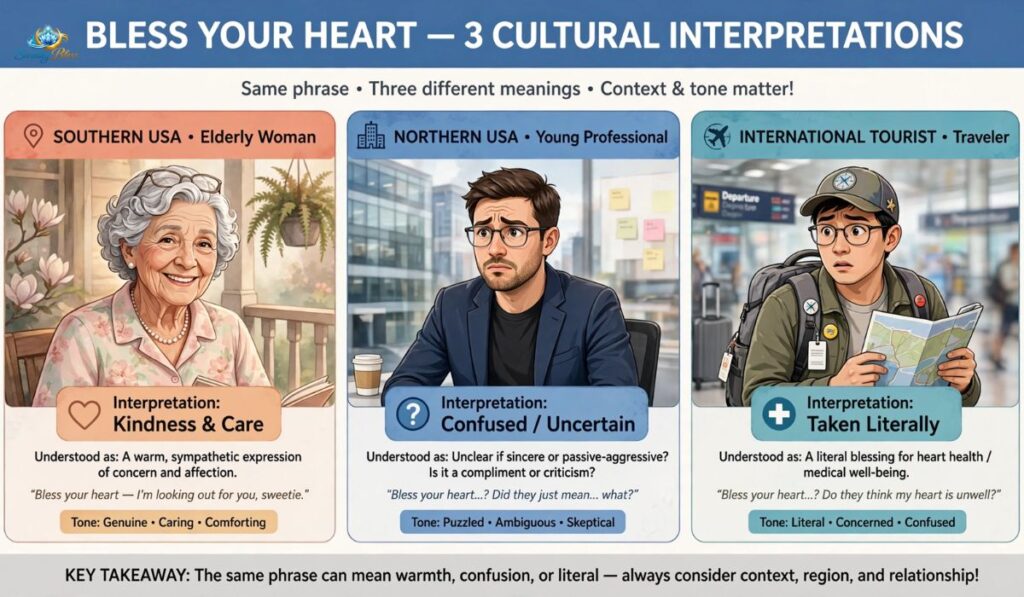
Bless your heart means something different depending on where you’re from. Southerners understand its many layers instantly. Northerners often take bless your heart at face value. That difference causes real confusion sometimes. Bless your heart carries deep cultural roots in the South. Outside that region, people miss its hidden depth completely.
International visitors struggle with bless your heart the most. Their culture might not have similar sneaky phrases. Bless your heart feels strange without that cultural background. It takes time living in the South to fully get it. Bless your heart teaches so much about American culture itself. Understanding it means understanding a whole way of speaking. That’s why bless your heart fascinates so many people worldwide.
Frequently Asked Questions
What does bless your heart mean as an insult?
What Does Bless Your Heart Mean can politely hide criticism, so What Does Bless Your Heart Mean depends on tone.
Is saying Bless your heart passive aggressive?
What Does Bless Your Heart Mean may sound passive aggressive because What Does Bless Your Heart Mean changes with delivery.
When a southern woman says bless your heart?
What Does Bless Your Heart Mean often shows kindness, sympathy, or gentle humor in Southern conversations and traditions.
What can I say instead of bless your heart?
What Does Bless Your Heart Mean has alternatives like Take care, Stay strong, or I understand your feelings.
Is saying bless you considered offensive?
What Does Bless Your Heart Mean differs because Bless you is usually polite and rarely considered offensive by people.
Final Thought
So there you have it. That’s what does bless your heart mean, really. It’s sweet. It’s sneaky. Sometimes it’s both at once. Now you know why Southerners love it so much. You know how tone changes everything. Next time someone says bless your heart, you’ll catch the real meaning behind it. You won’t feel confused anymore. You’ll just smile and understand.
Understanding what does bless your heart mean opens up a whole new world. It teaches you about culture, kindness, and gentle humor too. This little phrase carries big heart, literally. So go ahead, use bless your heart with confidence now. Listen closely to tone and timing. That’s the real secret. Bless your heart, you’ve officially become an expert.

Muhammad Hanzala focuses on SEO-driven growth, helping businesses increase organic traffic, strengthen online visibility, and build long-term digital success through effective search and content strategies.